Modernize Your Convenience Store While Keeping Business Moving

Renovating a convenience store is different from renovating an empty building. The doors still need to open, customers still need to come and go, deliveries still need to arrive, and employees still need to do their jobs while the work is taking place. That can make exterior improvements seem more complicated than they need to be.

The good news is that an exterior update doesn't always have to mean renovating the entire building at once. By focusing on the areas customers notice most, working in manageable phases, and choosing materials that can simplify the construction process, owners can make a substantial improvement without turning the property into a long-term construction site.


Start With the Areas Customers Notice Most

A convenience store doesn't necessarily need a completely new exterior to look substantially better. The main entrance, canopy columns, storefront, and other highly visible areas can have a disproportionate effect on how customers perceive the property, making them logical places to start. A stone accent around the entrance, a more finished appearance on columns, or a textured lower façade can change the character of the building without requiring every exterior surface to be replaced.

This approach also gives the project a natural stopping point. If the first phase produces the improvement you're looking for, there's no need to turn a manageable exterior project into a much larger renovation. For an operating convenience store, focusing the investment where customers actually see it can make an exterior upgrade much easier to justify.


Renovate in Phases Instead of All at Once

One of the simplest ways to reduce disruption is to divide the renovation into manageable areas. An owner might begin with the main entrance, then move to one side of the building, followed by another façade or a set of canopy columns. The exact sequence will depend on the property, but the principle is the same: limit the amount of active construction rather than having the entire exterior under renovation at once.

Phased work can also make sense from a budgeting standpoint. Improvements can be scheduled around other maintenance or capital projects instead of requiring one large renovation all at once. For a business that operates every day, that flexibility can be just as important as the finished appearance.


Choose Materials That Keep the Project Moving

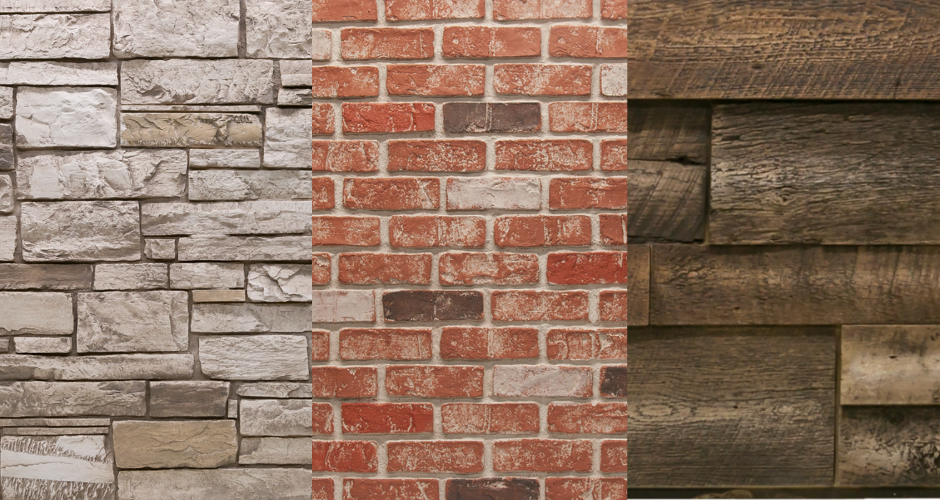
The material itself can have a major effect on how involved an exterior renovation becomes. Traditional masonry can require heavier materials, specialty trades, mortar, and additional coordination. Large-format faux stone and brick panels take a different approach, covering a relatively large area with each panel while remaining lightweight and easier to handle.

URESTONE 4x8 panels can be used to create a substantial visual change without approaching the project as a traditional masonry installation. That doesn't mean preparation or installation requirements can be ignored. The existing wall, substrate, fastening requirements, and specific application still need to be evaluated, but a panel system can provide another option when an owner wants the appearance of masonry without bringing the same type of construction process to the project.


Focus on Improvements That Customers Actually See

When a renovation has to happen around an operating business, it makes sense to prioritize improvements that have a visible effect. The main entrance is an obvious starting point, but canopy columns, storefront surrounds, lower wall areas, and sections of the building facing a major roadway can all provide opportunities to make the property look more finished and distinctive.

Faux stone or brick can also work alongside existing metal siding, painted surfaces, or other materials rather than requiring everything to be replaced. That makes it possible to introduce a stronger architectural feature while keeping much of the existing building intact.


Plan the Work Around the Business

The best renovation strategy is ultimately the one that recognizes the building is still a working business. Customer traffic, employee access, deliveries, parking, and fuel-pump traffic all need to be considered when deciding where and when exterior work should take place.

That doesn't mean every project needs a complicated construction schedule. It simply means thinking about the sequence before the work begins and keeping the active work area as manageable as possible. An exterior renovation can then become a series of improvements that work around the business instead of an event that puts the business on hold.


Final Thoughts

A convenience store doesn't stop being a business just because it's being renovated. Customers still need access, employees still need to work, and the store still needs to generate revenue while improvements are underway.

That is why exterior renovation is often best approached as a series of manageable improvements rather than one massive project. Start with the areas that matter most, choose materials that fit the project, and plan the sequence around the way the property actually operates.

URESTONE faux stone and brick panels can be part of that approach, giving convenience-store owners another option for creating a more finished, professional exterior without automatically turning the project into a major masonry renovation.

The goal isn't simply to renovate. It's to improve the property while keeping the business moving.

Final Thoughts Image

Request a Quote

Thinking about your next project? Request a free, no-obligation quote today and get customized assistance from one of our in-house experts ASAP!
Request a Quote